

NASHVILLE, Tenn. (WTVF) — A growing number of musicians say AI music generators aren't just learning from artists' work — they're copying the artists themselves.
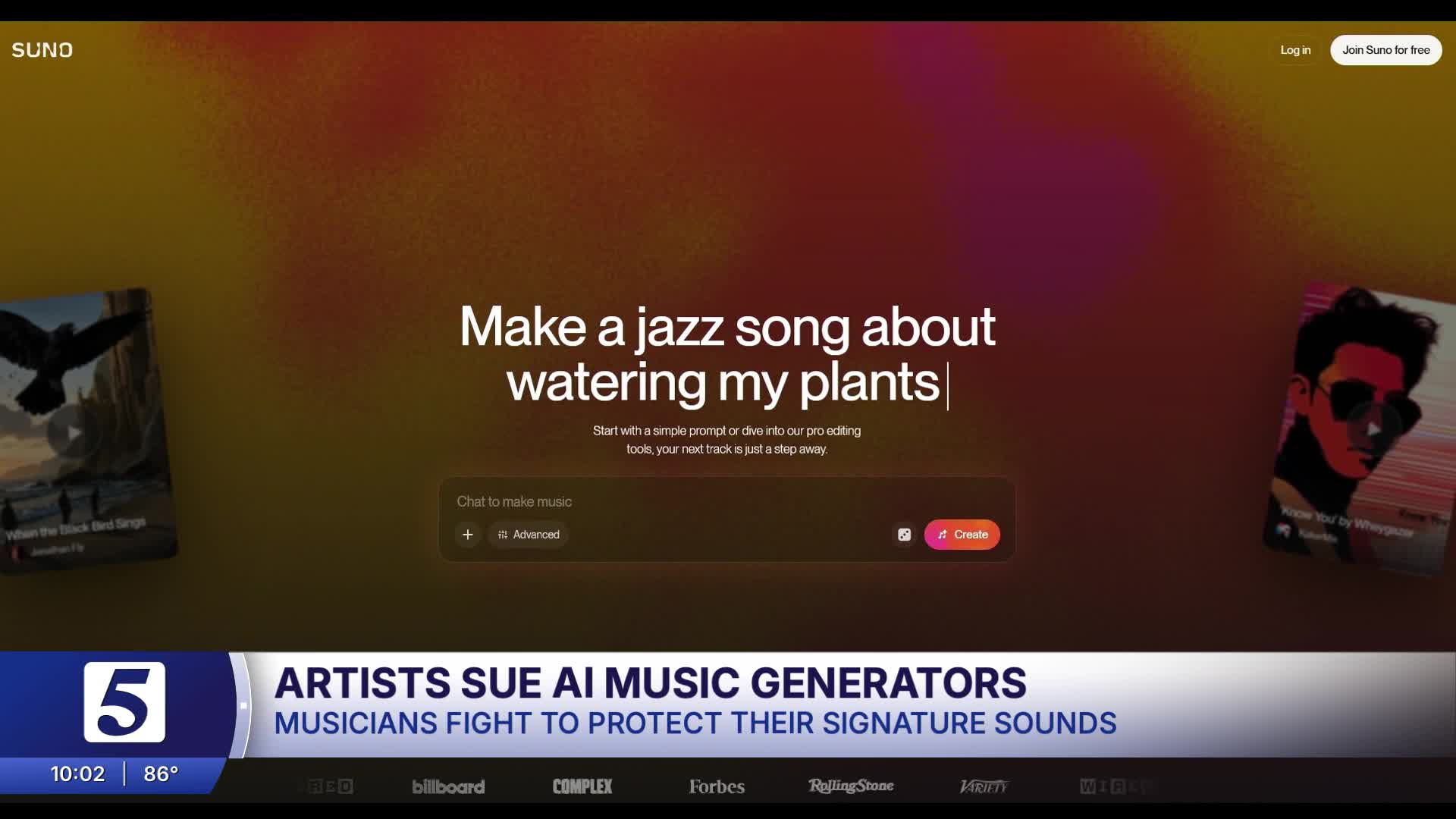
Jason Isbell and other musicians have filed a lawsuit against AI music company Suno, accusing the company of generating music that copies recognizable styles and characteristics without consent or compensation.
Dave Pomeroy, president of the Nashville Musicians Association and AFM Local 257, has spent a lifetime making music as a singer-songwriter and bass player.
He says the technology raises a fundamental question for the future of music: if a machine profits from an artist's sound, should the artist be paid?
"It's one of these things that it's the right thing for artists to stand up, especially an artist such as, you know, Jason Isbell or so many people who have a distinctive sound that is like, hey, that's my sound. Don't take that away from me," Pomeroy said.
To test the technology, I typed Isbell's name into Suno and asked it to generate a song in his style. Within seconds, it created a song.
For musicians, a signature sound is built song by song, year by year. But the lawsuit argues AI can imitate that identity almost instantly.
Pomeroy says Nashville has survived major disruptions to the music business before — but this moment feels different, because what's being copied now isn't just a song. It's the human behind it.
"I keep coming back to the word authenticity. I think that, you know, artificial intelligence has its limits. I don't care how detailed the process can get; it's still never going to be the same as human interaction," Pomeroy said.
Pomeroy believes the easier it becomes to imitate authenticity, the more valuable the real thing becomes.
"My long-term hope for all of this is that authenticity is made that much more valuable because of how easy it is to simulate something," Pomeroy said.
The question reaches far beyond Nashville. The outcome of these lawsuits could help decide who controls an artist's voice, style and identity in the AI era. Musicians say this isn't about rejecting technology outright — it's about whether the people whose work trained these systems will have any say, or any share, in what comes next.
This story was reported on-air by a journalist and has been converted to this platform with the assistance of AI. Our editorial team verifies all reporting on all platforms for fairness and accuracy.

September 11, 2001 is a day most associate with terror and tragedy. Austin Pollack shares a story from that day about hope and persistence: the effort to save a little girl’s life – with an organ donation. The problem? The young patient was in Houston, and her life-saving liver here in Nashville. With the grounding of all civilian aircraft, how could it be done? “Nobody ever said this isn’t possible.”
- Rhori Johnston